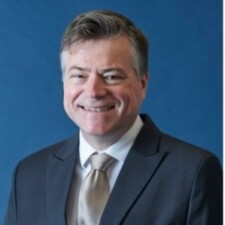
Professor Finbarr Allen BDS, MSc, PhD, FDS (Rest Dent) RCPS
Professor Finbarr Allen presents Oral rehabilitation for partially dentate older adults, planning for success and failure


This three‑part webinar series explores the evolving landscape of oral health in later life, equipping dentists with practical strategies and evidence‑based insights to better support ageing patients. The complexity of dental care for this population group means different strategies and considerations are needed. Careful planning and clinical skills will ensure high quality care is provided. Designed to strengthen clinical confidence and improve quality of care, the series offers a comprehensive look at how dentists can adapt to the needs of an ageing population while delivering treatment that enhances comfort, function, and overall wellbeing.
Managing an aging dentition poses many challenges, as the impact of chronic exposure to risk factors for toothloss accumulates during the course of a lifetime. Patient efficacy in controlling plaque tends to diminish with age and the oral dryness (“xerostomia”) associated with prevalent poly-pharmacy phenomenon, further exacerbates the pathogenicity of dental plaque. Plaque also accumulates around oral prostheses, such as removable partial dentures, and may thereby contribute to further loss of teeth. Older teeth often are at high risk of fracture, and this complicates provision of indirect restorations. A combination of toothloss and toothwear can result in an unstable occlusion, further contributing to an unstable clinical situation. The height of residual crown structure is also a factor in planning restorations. Identification of risk factors for toothloss is vital, and horizon scanning for all partially dentate older adults is vital to reduce the problems associated with unplanned toothloss in the future. A key challenge is deciding when to try to maintain a natural dentition and when to transition to edentulousness. Transitioning to the edentate state requires careful management, and if possible, it is preferable to avoid. I will discuss the concept of reducing risk and burden of maintenance through functionally orientated treatment planning for older, partially dentate adults. The shortened dental arch concept has been proposed as a means of providing a stable, functional and natural dentition. In this lecture, I will also discuss the fundamental of the concept and criteria for case selection. Using treated cases, I will illustrate the use of adhesive bridgework to extend shortened dental arches, and restore missing anterior units. Indications for use of implants in older adults will also be discussed. Guides on case selection for these techniques will be provided. Finally, I will offer a view on how to decide to render a patient edentate and discuss some of the techniques which will facilitate transition to the edentate state, including transitional partial dentures and replacement overdentures.
Professor Finbarr Allen presents Oral rehabilitation for partially dentate older adults, planning for success and failure